

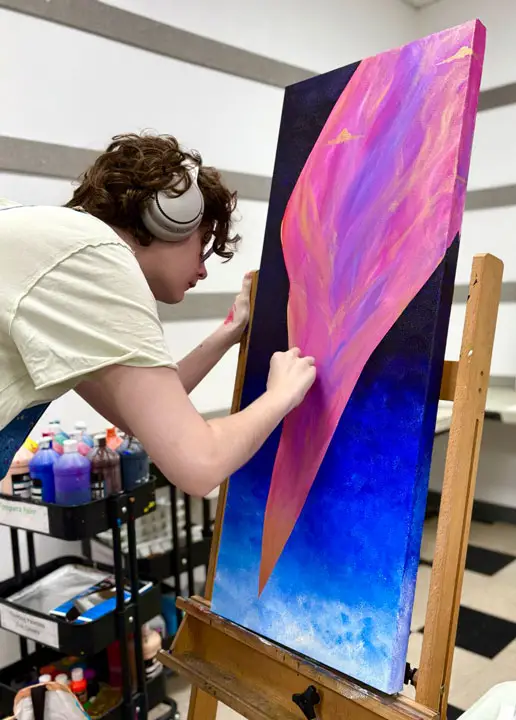
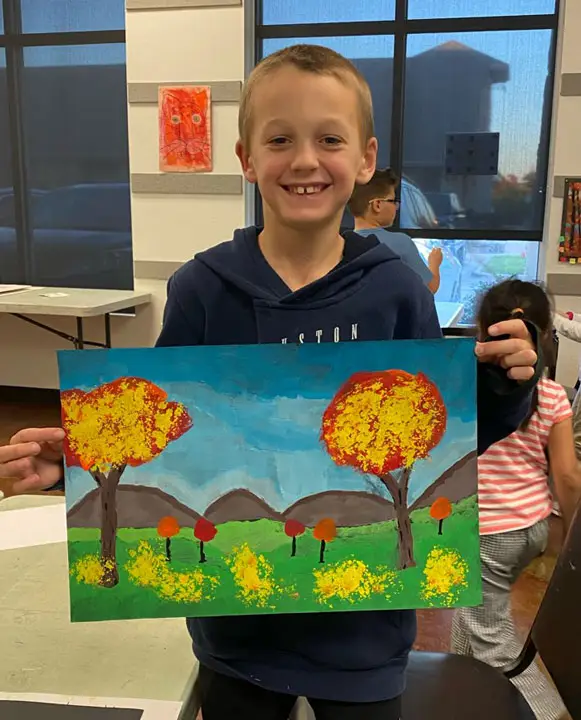
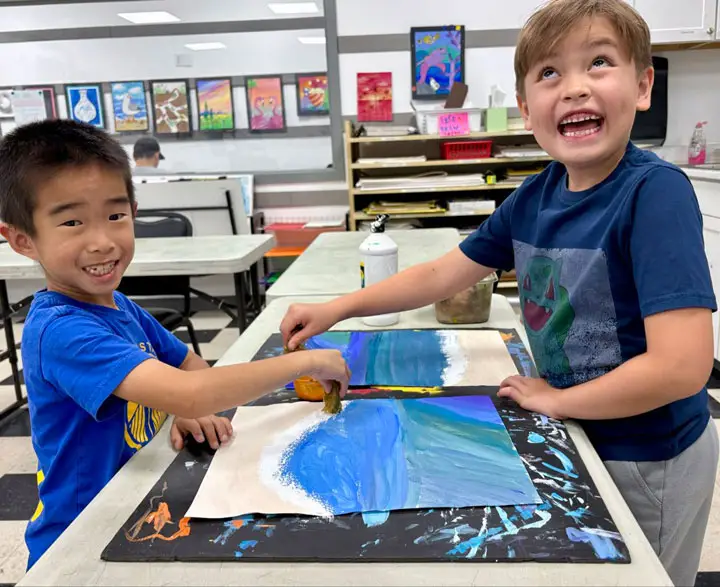
Tempera paint is bold, colorful, and fun to work with — and when you use a sponge, it opens up a whole new world of texture. Sponges are great for creating patterns that brushes can’t — from soft clouds to rough rocks or leafy trees.
A sponge’s uneven surface picks up and leaves paint in random ways, making every mark unique. Instead of smooth brushstrokes, you get natural, organic textures that add depth and interest to your painting.
Sponge painting with tempera is quick, creative, and full of surprises. It’s perfect for artists of any age who want to explore texture, play with color, and loosen up their style. Each dab and swirl of the sponge adds movement and energy, turning ordinary paint into something full of life.
Once you start experimenting, you’ll see how a simple sponge can spark endless ideas—from soft skies and leafy trees to bold abstract patterns. It’s a fun, no-pressure way to let go of perfection and focus on the joy of creating. With just a sponge and some paint, your artwork can feel spontaneous, expressive, and completely unique.